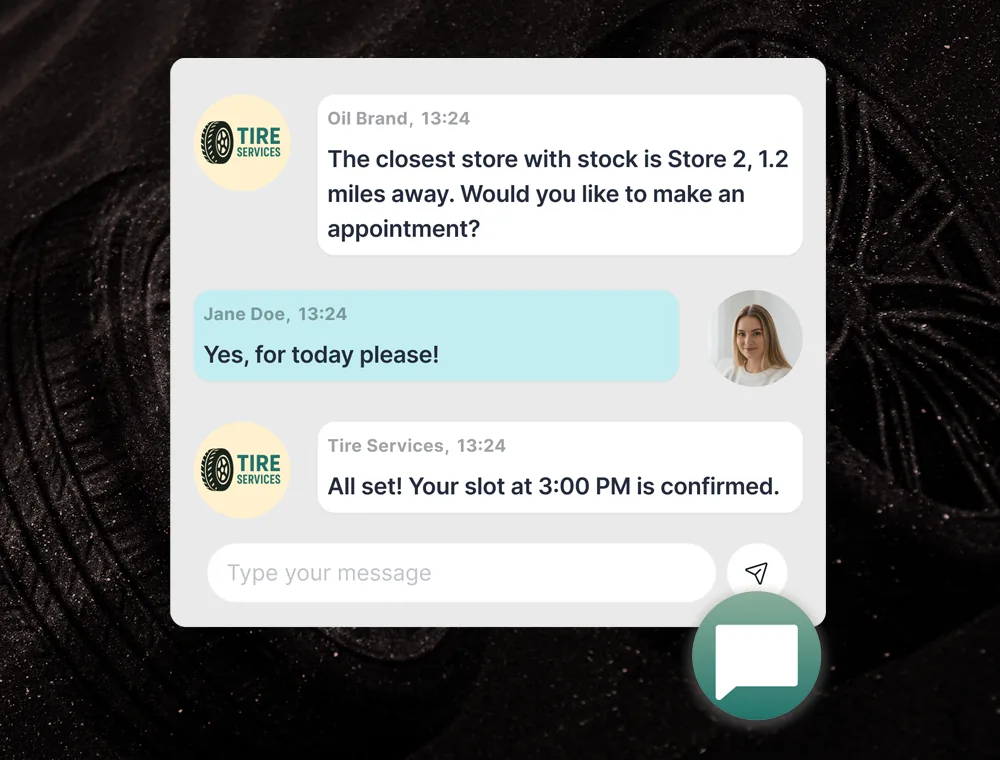
Website visitors were expressing interest.
Dealers were responding too late.
Bridgestone was generating significant digital demand through consumer marketing, including visits, product interest, and dealer locator interactions. But the conversion from digital interest to actual sale was broken at the handoff. When a visitor filled in a contact form, they were routed to a dealer. The dealer had no system for managing or prioritizing incoming leads. Average response time was measured in days.
By the time a dealer followed up, the customer had already bought elsewhere, often from a competitor with a more responsive local dealer network. The marketing investment was working. The commercial handoff model was failing.
The problem had two layers: there was no technology to route and manage leads in real time, and the commercial incentive structure for dealers didn't create urgency for digital follow-up. Fixing the tool without fixing the model would have solved half the problem.